Background
 Strategic Funding Advisor
 Firm Expertise
 Practical Experience
 Legendary Customer Service
 Closed Deals
 Testimonials
 Business Funding
 Acquisition Funding
 Mezzanine Funding
 Advisory
 Mezzanine Funding
 Mezzanine Expertise
 Mezzanine Tools
 Acquisition Funding
 Acquisition Funding Expertise
 Advisory
 Case Studies
Some loan approvals are simple while others are a winding road. Mezzanine financing is one of the most difficult loan approvals in the credit market. Simple yes approvals are for commodity type loans such as real estate or asset-based loans based on receivables. These loans can be credit scored using simple credit ratings or asset collateral valuations.
The goal is to arrive at the collateral value of the loan which the lender will discount to ensure their loan is within the collateral value.
Mezzanine Financing Requires More Than Collateral
Mezzanine loan approvals are based on historical financial performance and expected performance from the mezzanine financed investment be it an acquisition or internal growth. Most companies would not qualify for mezzanine finance based solely on their collateral values or historical financials.
Companies with acquisition growth tailwinds use mezzanine financing to transform in size, with the resulting company exponentially larger than the starting point. The lender providing such loan must have conviction that the company possesses the management strength to buy the right assets and integrate them expertly into the platform.
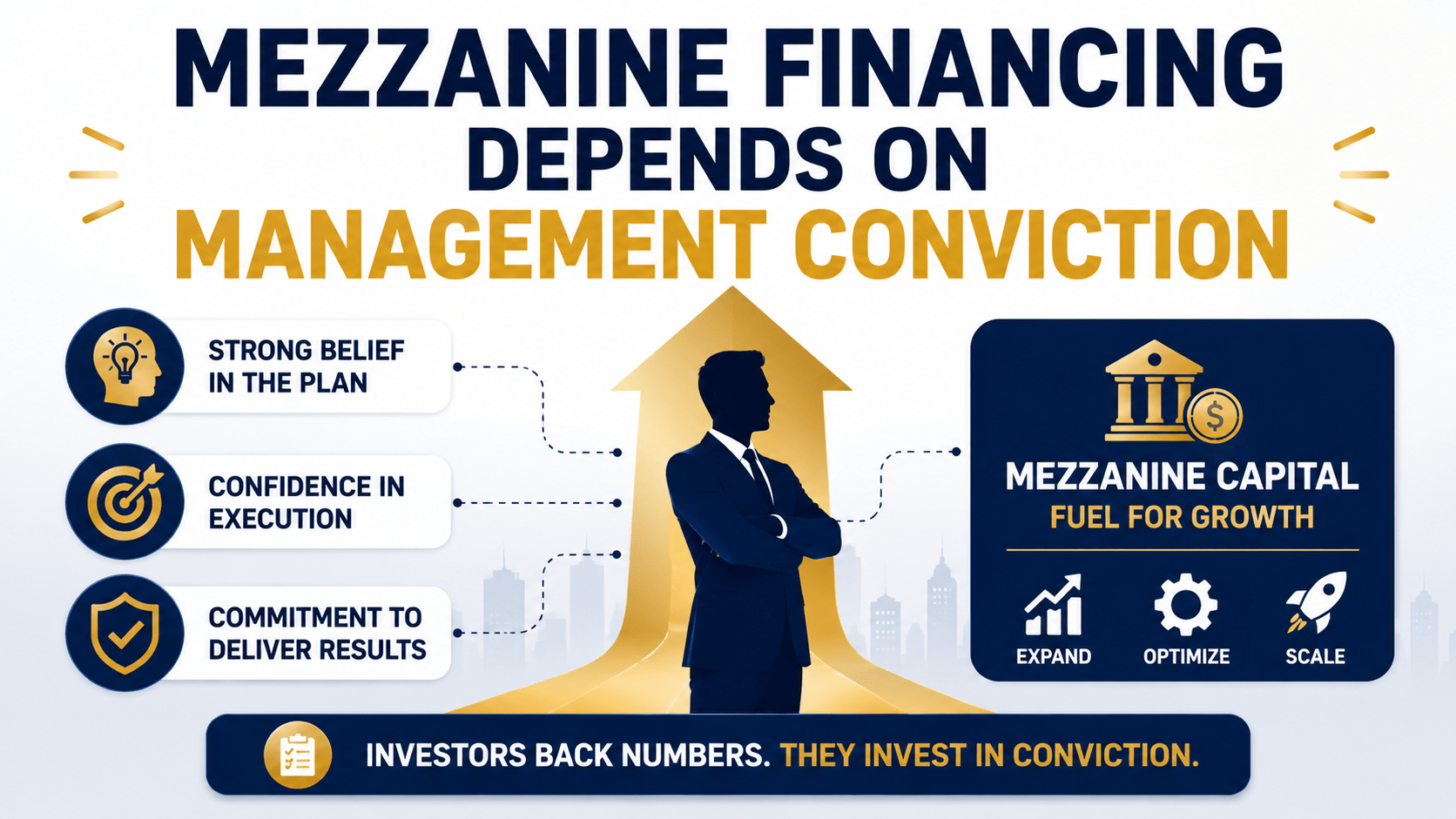
Many unexpected challenges can arise along the way including operational lapses, talent deficits or financial woes. However, when mezzanine finance providers decide to lend to a company, they make a bet that management will prevail and overcome all elements and materially increase EBITDA.
Mezzanine Financing Is a Vote of Confidence in Management
If the Company cannot convert the mezzanine funding into higher levels of EBITDA, the loan is at risk of non-repayment and usually ends up poorly for the lender. Given this, mezzanine financing providers dive deeply into operational and management review during diligence.
When they decide to make a large mezzanine loan, they must have high conviction in the talent of the management team and high conviction in their acquisition vision. If the wrong team purchases the wrong asset, the mezzanine financing provider will likely fail to recover their principal and have a terrible return.