Background
 Strategic Funding Advisor
 Firm Expertise
 Practical Experience
 Legendary Customer Service
 Closed Deals
 Testimonials
 Business Funding
 Acquisition Funding
 Mezzanine Funding
 Advisory
 Mezzanine Funding
 Mezzanine Expertise
 Mezzanine Tools
 Acquisition Funding
 Acquisition Funding Expertise
 Advisory
 Case Studies
While profitability is great to have and certainly a key criterion, it alone does not lead to a successful mezzanine debt raise. Profitable companies can still face a number of obstacles trying to scale the bar for mezzanine debt financing.
Over the last 35 years, we have chronicled many such instances where a company believes their profitability alone will get them funded yet fail to get their deal done. There are five main reasons for this – type of company, deal structure, presentation, diligence response and management maturity.
Some companies may be highly profitable, perhaps even wildly profitable, but fall outside the scope of business type for the mezzanine debt community. This most frequently occurs in industries that lenders have historically shied away from including construction, commodity and e-commerce.
The lenders are simply not comfortable with the products and end markets, which makes it challenging for them to issue a long-term loan, regardless of profitability. The deal structure is also a main obstacle where the company or buyer may put in too little equity.
Trying to get a mezzanine debt lender to fund 100% of the cash need with little buyer equity contribution is a fool’s errand. The loan amount should be undergirded by either cash or rollover equity, and it should comply with market-level leverage math (3 times – 4 times EBITDA).
Why Companies Struggle to Secure Mezzanine Debt
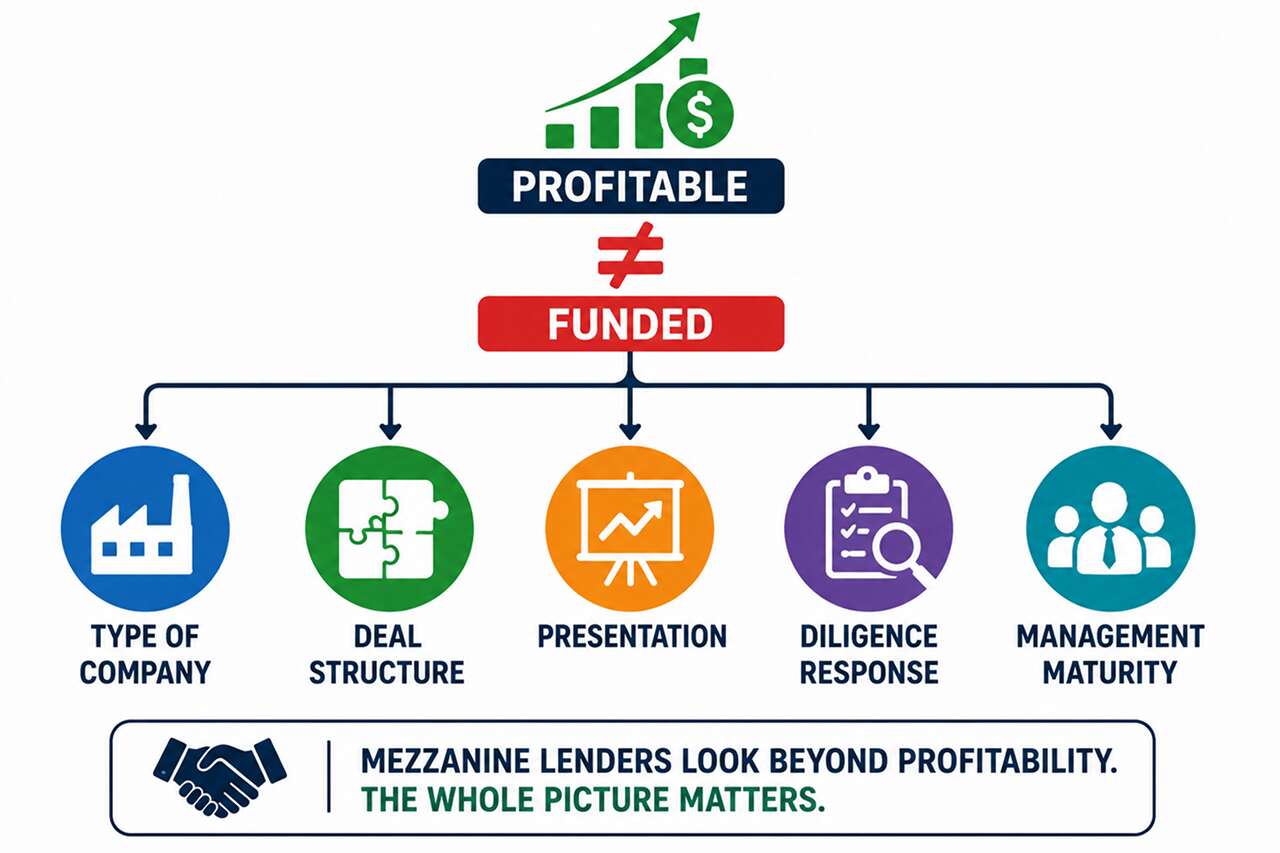
Some companies do a lousy job presenting their company and especially their growth plan to the mezzanine debt lender. The lender needs to strongly believe in the growth plan in order to lend, as they need cash flow to grow in order to get their loan repaid.
No cash flow growth equals questionable loan principal repayment, which is a danger sign for the lender. The less clear the qualitative and financial description of the company is, the more likely it will not secure mezzanine debt funding.
Despite having all other boxes ticked, some companies blow it in the diligence response process when the lender asks for next level financial data that they cannot provide.
Finally, not all owners or senior managers have the temperament for mezzanine debt lending, as they are not used to being questioned extensively or challenged on long term strategy. While mezzanine debt lenders are highly tolerant of individuality in the management ranks, they do not like immature or emotional leaders.
Too much drama is a danger sign, making it difficult to build a stable relationship.